One of the first things I learned when I first joined Alpinestars, was that they didn’t use the word “marketing”. “We’re not a marketing company; we’re a product company.” is what I was told during my early days.
It’s been a while now since I was marching up and down the corridors at the HQ in Asolo with the company salesmen (I am sure they are smirking If they are reading this), but I still believe that is a motto the company lives by every day. It can sound a bit bold at first, yet once you see the company from the inside, as I did, you realize it’s true.
And therefore I have to include Alpinestars in the bucket of companies I write about, those that do not follow the usual marketing playbook, but top down they are just trying to live and breath their passion, in this case: racing.
At Alpinestars everything revolves around the product. Internally, one of the guiding sayings was: “We race on Sundays, and innovate on Mondays.” During my time there, that mindset set a clear tone: product first, continuous improvement always. And it wasn’t limited to product lines, staff were encouraged to set a higher standard everyday, too. Performance was expected because the company’s first objective was protection: not only for the countless athletes who were then, and even more so now, part of the Alpinestars family, but for riders and drivers everywhere who, as hobbyists, amateurs, or local competitors, share the same passion for motorsports as the CEO and son of the original founder, Gabriele Mazzarolo.
Gabriele is the driving mind, the one who chose to move beyond traditional marketing tactics and instead focus on supporting athletes at the highest possible standard.
Some of my former colleagues might read this and think I’m stating the obvious. Others may not have the time, or the need, to step back and consider the bigger picture of “marketing” here. But there is a very deliberate vision at play: it isn’t about “marketing the product” so much as building a deeper connection. And I suspect (though I never asked) this is the reason why the word “marketing” isn’t used.
As we use it today, the term feels too reductive to describe what the company has achieved, and what it works to maintain year after year: a real, living connection with motorsports and with everyone involved, from little kids to world-class athletes in MotoGP and Formula 1.
So how do they do it?
The “no-marketing” marketing strategy
In my previous article, I told the story of a small flower shop that, with a “no marketing” approach, became the most renowned shop in the town where I live, hosting meetups and live events. Alpinestars is another great example of a company that thinks outside the box. Yes, they have the usual social channels, but instead of investing budget in traditional marketing activations, they go all-in on supporting as many motorsport championships as they can, supplying athletes with protective gear, equipping teams, and running racing service at the track.
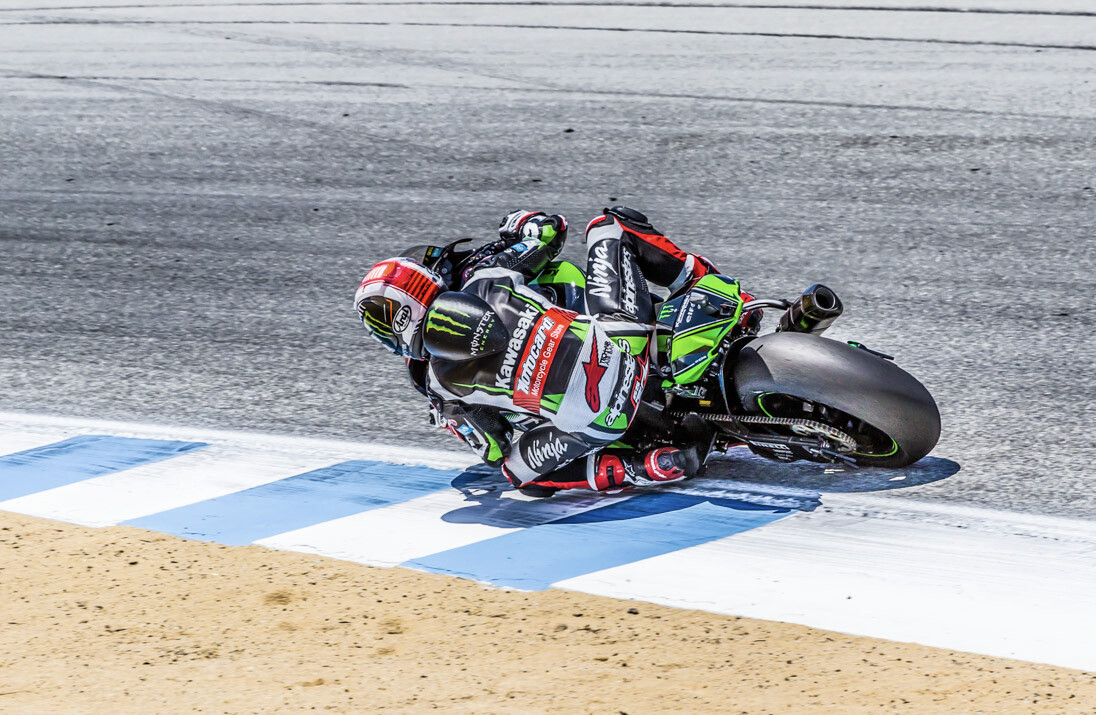
If you follow motorsports, you see them everywhere, so much that I can confidently say Alpinestars is one of, if not the, most visible brands across global motorsport events, from regional series to world championships, on two wheels and four.
Being so intertwined with the athletes has countless positive effects:
-
It places the brand at the highest level of performance. In a prospect’s mind, seeing Alpinestars on the suit of Marc Márquez or Lando Norris signals a winning brand. So when you walk into a gear store, who wouldn’t want to wear the same brand, and even the same gear, as the champions? You don’t need more “marketing” than this. It’s doing marketing without showing you’re doing marketing.
-
It reveals the spirit behind everything the company does and gives the products legitimacy. Go a step deeper: Alpinestars gear isn’t just aspirational, like a bag by Hermès might be, it proves performance at the highest level. It protects. It saves lives. It keeps athletes racing at 300 km/h. If they trust their lives to Alpinestars, so can we. That’s again great marketing without even using the word.
And I can testify to this from my time at there: athletes are treated like royalty, at the races and behind the scenes. Everyone at the company goes above and beyond to make them feel like family. They are genuinely taken care of, and that’s why this approach works so well. I don’t think Mr. Mazzarolo even sees it as a tactic; it’s where his true passion lies. He isn’t a manager obsessed with a balance sheet, he’s someone who loves racing and wants to contribute in the way he knows best: by creating products that protect racers. For years, the company’s main slogan said it simply: “Alpinestars protects.”

Alpinestars protects
“Alpinestars protects” may be the simplest slogan you’ve ever heard, but after the story I’ve shared so far, isn’t it simply perfect? I’ll admit I didn’t fully grasp it when I was on the inside, when you’re immersed, you’re often too informed, too involved. Now that, like everyone else, I experience Alpinestars from the outside, and through a branding lens, I think it’s perfect in its simplicity, for a few reasons:
-
Easy to remember.
-
It communicates the company’s core positioning: we are extremely serious about your safety. Yes, the products are beautiful, but if you’ve ever ridden a motorcycle or been involved in motorsport, you know the number one thing you want, before anything else, is safety. It should be a given, yet no other brand across Alpinestars’ categories has made “protection” theirs. Being the first the most consistent at using “protection” as main differentiator, builds an unconscious bridge in our mind, that connects the brand to safety, and trust.
And trust drives purchase decisions. In today’s over-communicated world, we don’t buy by tallying features and benefits; we buy when we trust. The slogan centers that trust.
Looking at this from a colder positioning perspective, this could be brought up in a classroom as an example of a perfectly orchestrated positioning. Imprinting is as true in nature as it is in marketing, and in marketing it happens through clarity of message and consistency of messaging. The number one goal in positioning is to be the first in your prospect’s mind, and being first at owning the ‘protection’ space in the customer’s mind is what the slogan achieves. It also:
-
makes you feel Alpinestars is “one of yours.” They’re on your side, enabling you to enjoy your passion, not on the other side of the counter trying to fill your bag with fluff. The best branding and sales strategies are able to position a product as something that helps you advance in your daily life, something that helps you solve a problem, and “Alpinestars Protects” projects exactly that sentiment.
-
connects the Sunday rider to the world-class athlete. In “Alpinestars protects,” there’s no object. It means everyone, at any level, anywhere. It’s inclusive; it makes you feel part of the tribe. It doesn’t even sort people by age. In fact, another strength of Alpinestars’ “no-marketing” strategy is onboarding racers when they’re young.
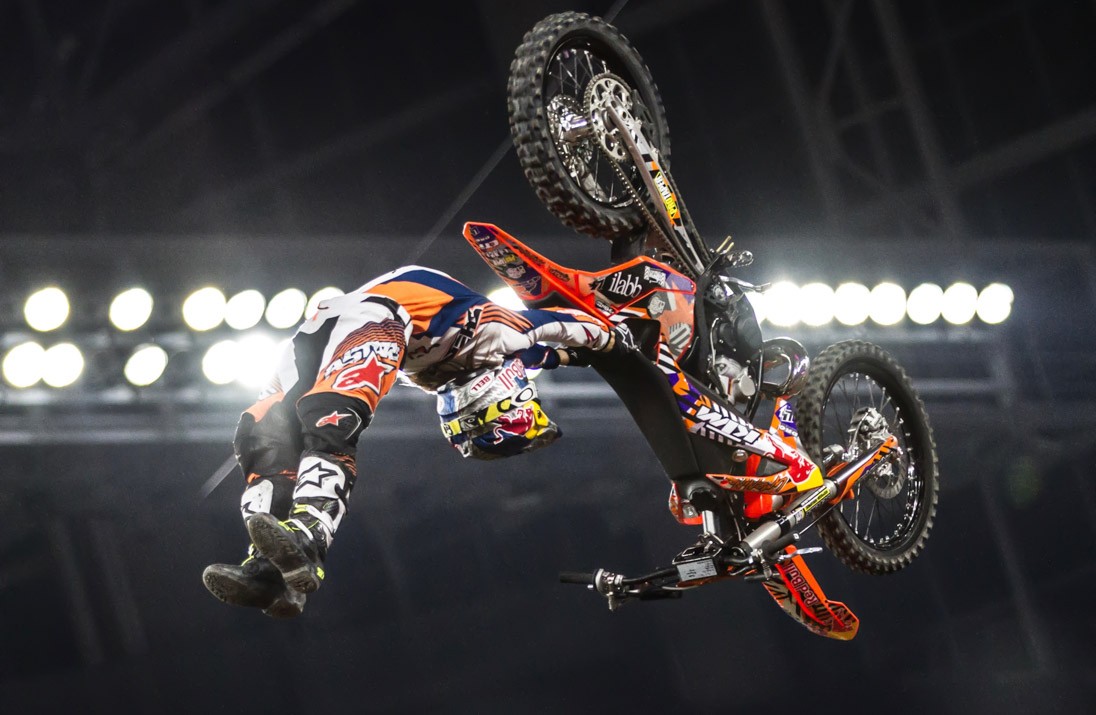
Get them while they are young
As Al Ries and Jack Trout said in Positioning:
“If you want to be successful in love or in business, you must appreciate the importance of getting into the mind first. You build brand loyalty in a supermarket the same way you build mate loyalty in a marriage: you get there first, and then be careful not to give them a reason to switch.”
When kids grow up riding or driving while wearing a specific type of gear, they’ll want to keep using it even if, and when, they become champions, right? It’s common sense. It’s like finding the running shoes, hiking boots, or cycling kit that fits perfectly: once you do, you stick with it. Alpinestars understands that the more technical a product is, the harder it is to switch once you’re comfortable with a specific brand. So what’s the idea here? Support kids and youth-focused championships, like the Red Bull Rookies Cup, which has historically fed riders into Moto3, Moto2, and even MotoGP.
This is a strategy that, in sports, many brands consciously or unconsciously use, because it is understood that the tools you learn with become part of your “game.” But I don’t see many other industries applying it as deliberately.
Standing by your potential customers while they’re learning a skill that might later require your product or service is incredibly powerful, especially in tech and gaming, but also in art and design, photography, even banking. Getting people used to your system when they’re taking their first steps will likely make them loyal for a very long time, unless something goes seriously wrong.
Yet few companies take this road. It’s seen as costly and risky. That’s why it tends to be brands like Alpinestars, those with a genuine passion and a clear mission to contribute to the sport, that truly commit to “getting them young.”
Netflix series
The cherry on top of doing something you genuinely care about is that you might find yourself in the right place at the right time when something happens that pushes you to the next level. I’m not sure how many of you follow Formula 1, but something worth mentioning happened in recent years thanks to Netflix. In 2019, Netflix launched Drive to Survive, a behind-the-scenes documentary on Formula 1 drivers and teams. It became a huge success in the U.S. and around the world, and the overall fan base, people attending live, watching on TV, or getting passively involved, surged. For example, the latest race in Austin, Texas a couple of weeks ago had around 450,000 in live attendance, while in 2019 attendance was only 268,000.
I’m honestly one of those people: I watch the gossip and the behind-the-scenes during the week, the races on the weekend, and the interviews after. And like me, millions are doing the same thanks to Drive to Survive. And what’s one of the brands you see the most? Alpinestars.
They were in the right place at the right time, not by chance, but because they had been at the forefront of Formula 1 for years, doing what they love to do.
Now, if you’re into motorsports you know the brand “Alpinestars,” but if you’re not, you probably still don’t. Not for long. Formula 1, thanks to Netflix, has become almost like a soap opera, and a lot of people who normally wouldn’t have been involved are now crazy about it. Those people are being exposed, often for the first time, to a brand they might never have heard of before: Alpinestars. I’ve seen it firsthand: I have friends I introduced to Drive to Survive who didn’t even know who Lewis Hamilton was a year ago; this year they went to F1 in Austin, and they’re so into it they’re even playing F1 fantasy.
At the end of the day, I’m not even sure Mr. Mazzarolo is thinking about all these strategic ripples I’m outlining, not because he couldn’t develop such a strategy with his team, but because, from what I remember while working there, the relationship with the athletes, the fact that they are the center of a “no-marketing” philosophy, and even the slogan “Alpinestars protects,” all spring from a very genuine passion the company has for the sport.
And in an ocean of companies we can trust less and less as consumers, I wanted to share this truth about Alpinestars and add them to the list of companies that aren’t just trying to make a buck, but are contributing to the world they believe in: